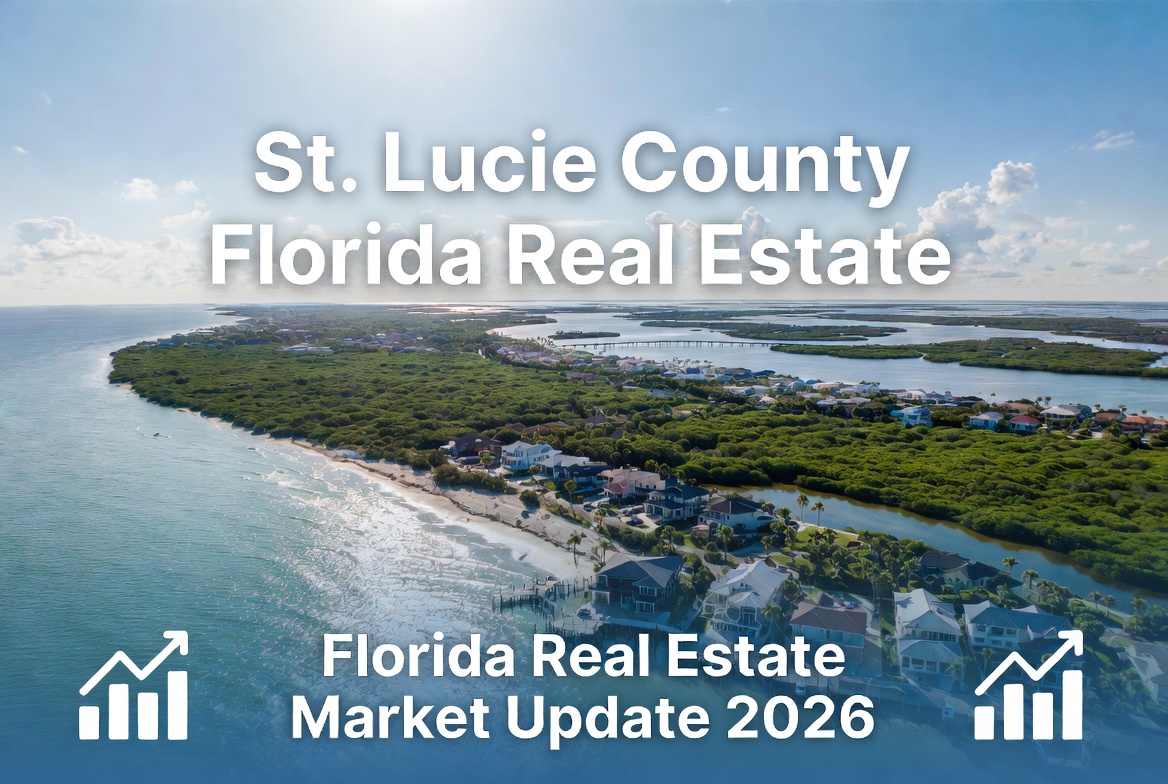
The 2026 Housing Report: Analyzing the "Balanced Rebound" in St. Lucie County and Florida
The 2026 Housing Report: Analyzing the "Balanced Rebound" in St. Lucie County and Florida
PORT ST. LUCIE, FL — As of February 10, 2026, the Florida real estate narrative has shifted from the volatile "boom and correction" cycle into what analysts are calling the "Balanced Rebound." After a year where Florida homeowners saw a median value correction of approximately $10,157, the market in early 2026 is showing signs of firm stabilization. While coastal high-rise markets continue to face pressure from rising HOA fees and insurance assessments, lifestyle-driven hubs like Port St. Lucie are emerging as the state's primary models for sustainable growth.
The data from February 2026 reveals a market that finally "cares about today," moving away from the pandemic-era comps that haunted 2024 and 2025. For the informed homeowner, the current state of the market is best understood through three key lenses: price equilibrium, inventory health, and the "New 6% Normal" in financing.
St. Lucie County: The Snapshot of Stability
St. Lucie County continues to outperform many of its southern neighbors in terms of price retention. While parts of Southwest Florida have seen double-digit drops, St. Lucie has maintained a remarkably steady course.
Key Market Metrics (February 2026):
Average List Price: $435,525 (down 3.7% year-over-year, reflecting a healthy recalibration).
Average Days on Market (DOM): 103 Days. This is a significant increase from the 74-day average seen last year, signaling that buyers are taking their time to conduct thorough due diligence.
Sale-to-List Ratio: 97.8%. Most homes are selling slightly below asking price, with sellers increasingly open to concessions and repairs.
Inventory Level: 1,725 active resales. This represents a steady monthly increase, moving the county toward a 6-month supply, the gold standard for a "perfectly balanced" market.
Florida Statewide Trends: The "Great Sorting" of 2026
Across the Sunshine State, 2026 is being defined by a "market-wide sorting." Florida is no longer a monolith; instead, it is a collection of micro-markets moving at different speeds.
The Price Floor: The statewide median home value currently sits around $350,000, down roughly 5% from the 2024 peak. This moderation indicates that the market is no longer overheated, and prices are now adjusting to wage-driven realities.
The Reduction Reality: Nearly 44% of listings statewide are experiencing price reductions. This high percentage shows that initial asking prices are being "re-baselined" by the market in real-time.
The Insurance Influence: In February 2026, the "uninsurability" of older roofs and high-rise condos continues to be a primary driver of price drops. Homes with 2024–2026 roof certifications are commanding a 12%–15% premium over those with "aging envelopes."
The "New 6% Normal" and Buyer Psychology
The most significant change in 2026 is the stabilization of mortgage rates. After years of uncertainty, 30-year fixed rates have settled into the low 6% range. This consistency has "unlocked" the market in two ways:
Rate-Locked Sellers are Moving: Homeowners who felt "trapped" in 3% mortgages are finally listing their homes, realizing that the "New Normal" is here to stay.
First-Time Buyers are Recalculating: Younger buyers are re-entering the market, often escaping rental rates that have remained high despite the stabilization of home prices.
Infrastructure: The Invisible Hand of Value
In Port St. Lucie, property values are currently supported by the physical completion of massive infrastructure projects. The Tradition Mobility Hub and the Crosstown Parkway extension are now fully operational, fundamentally changing the "east-west" commute.
Properties located within the "Innovation District" and near the Southern Grove Jobs Corridor are seeing the highest demand. These areas are attracting "end-user" buyers—people who are moving for high-wage jobs at the new Costco Distribution Center or the Legacy Park industrial hubs—rather than speculative investors. This shift from "speculation" to "utility" is the strongest safeguard against a future market crash.
Strategic Advice: Navigating the Balanced Market
In a market with 103 days on market, the strategy for both buyers and sellers must be precise.
For Sellers: You are no longer in the "post-pandemic frenzy." Pricing your home based on what your neighbor got in 2022 is a recipe for a stagnant listing. To stand out among the 1,725 available homes in PSL, your property must be "retail-perfect." If you cannot afford the $25,000 in repairs required to compete with new construction, seeking a path to sell house as-is Port St. Lucie is the most effective way to avoid the "Price Reduction Cycle."
For Buyers: You finally have the "Power of Choice." With inventory rising and homes sitting longer, you have the leverage to negotiate for repairs, closing cost credits, and insurance contingencies. Focus on homes with modern hurricane-impact features, as these will have the lowest carrying costs in the 2026 insurance environment.
Conclusion: A Safe, Sustainable Market
The consensus for February 2026 is clear: Florida is not heading toward a crash, but a correction into sustainability. Port St. Lucie remains one of the safest bets in the state, benefiting from a unique combination of population growth, robust infrastructure, and relative affordability.
Whether you are looking to stop foreclosure Port St. Lucie or relocate into a new build in Tradition, the current market rewards those who act with data over emotion. The "Great Sorting" is here, and it is creating a healthier real estate ecosystem for everyone involved.
The Economic Undercurrents: Population Growth and the New Workforce Reality
To truly grasp the 2026 market, one must look beneath the surface of housing statistics at the engine driving the demand: unprecedented population growth. According to the latest 2026 data from the St. Lucie County Economic Development Council, the county’s population has surged to approximately 390,670 residents, with Port St. Lucie alone accounting for nearly 258,575 of that total. This makes Port St. Lucie the 6th largest city in Florida, a staggering climb from its position just a decade ago.
Between July 2024 and July 2025, the Port St. Lucie metro area recorded the 5th largest population increase in the entire nation. This isn't just a collection of retirees; it is a diversified regional workforce of over 325,000 professionals across the Treasure Coast. The shift toward a "knowledge-based economy" is evident in the rapid expansion of industrial and flex-space developments.
Tradition Commerce Park: Offering over 160,000 square feet of multi-use space.
Glades Logistics Park: Providing massive warehouse footprints to support Florida’s supply chain.
Dragonfly Commerce Park: Focused on high-tech and light manufacturing flex spaces.
This industrial boom is creating a permanent floor for residential values. For homeowners, this means your property is no longer just a house in a bedroom community—it is a critical piece of housing for the thousands of professionals moving here to staff the state's growing logistics and tech corridors.
The Great Inventory Thaw: Breaking the "Rate Lock"
For the past few years, the market was gripped by what economists called "The Great Stay"—a period where homeowners with 3% mortgage rates refused to sell, fearing they would be priced out by 7% or 8% rates. In early 2026, we are witnessing the "Thaw."
The Federal Reserve’s series of rate cuts throughout 2025 has brought 30-year fixed mortgages into a more palatable range of 5.9% to 6.3%. Fannie Mae’s January 2026 forecast predicts these rates will remain stable near 6% for the foreseeable future. This stability has given homeowners the confidence to finally make their move.
Active Listings Surge: Port St. Lucie currently has approximately 4,383 active listings (CBSA data), a healthy increase from the lows of 2023.
Buyer Choice: With a 4.3 to 6-month supply of inventory, the market is no longer a "take it or leave it" environment. Buyers now have the leverage to ask for interest rate buy-downs or closing cost contributions, which have become standard in 2026 negotiations.
The Insurance Renaissance: A Historic Turning Point
Perhaps the most surprising news of 2026 is the stabilization of the Florida insurance market. After years of double-digit hikes, Governor DeSantis recently announced a historic drop in home insurance rates following the success of legislative reforms in 2023 and 2025. These reforms effectively targeted frivolous litigation and contractor fraud (AOB abuse), which were the primary drivers of the crisis.
Citizens Rate Reductions: Citizens Property Insurance has filed for an average statewide reduction of 8.7% for 2026.
Private Market Return: 17 new insurers have entered the Florida market since 2024. Carriers like Florida Peninsula and Patriot Select are filing for rate decreases ranging from 8.4% to 11.3%.
The Wind Mitigation Premium: For homeowners, a new roof or impact windows isn't just a safety feature; it is now a massive financial asset. An updated wind mitigation inspection in 2026 can trigger an additional 20% to 30% discount on these newly reduced premiums.
This "Insurance Renaissance" is injecting millions of dollars back into the local economy and significantly lowering the "Total Monthly Payment" for prospective buyers.
Infrastructure Milestones: Building for the Quarter-Million
Port St. Lucie is not just growing; it is modernizing. The city’s infrastructure is finally catching up to its population. In 2026, the St. Lucie West Services District is finalizing its "Water Treatment Plant Redundancy Improvement Project," adding a second deep injection well to ensure long-term sustainability for over 2,600 new customers in the PGA Village and Reserve CDD areas.
Furthermore, the proposed Sentinel Grove Technology Park—a 1,200-acre project near Fort Pierce—remains a focal point of 2026 economic discussions. While currently under state review, the potential for a 1-gigawatt data center facility could bring 15 million square feet of commercial building space and thousands of high-tech jobs to our doorstep.
The "New Normal" Strategy: 2026 and Beyond
What does all this data mean for the individual homeowner in Port St. Lucie? It means that the market is predictable again. We have moved away from the "lottery win" appreciation of 2021 and into a market where home values are expected to appreciate 2–4% annually—a sustainable, healthy rate that matches income growth.
For Sellers:
Success in 2026 depends on condition and disclosure. Buyers are no longer desperate; they are diligent. Properties that are "certified" (new roof, updated HVAC, clear code history) are selling at 98.9% of asking price. If your property doesn't meet this gold standard, the smartest move is often to sell house as-is Port St. Lucie to avoid the long 103-day wait and the inevitable price reductions that hit 22% of active listings this month.
For Buyers:
The "wait and see" approach is losing its efficacy. With mortgage rates likely to hover around 6% for the next two years, the focus should be on locking in lifestyle. With inventory rising, you have the rare opportunity to negotiate for the "perfect" lot or neighborhood without the fear of being outbid by a dozen cash offers.
Conclusion: The Treasure Coast’s Sustainable Future
St. Lucie County in 2026 is a model of what a modern Florida metropolitan area should be: proactive, resilient, and economically diverse. While challenges like the "Condo Conundrum" (rising HOA fees for high-rises) affect South Florida, Port St. Lucie’s focus on single-family home stability and massive industrial job creation has created a uniquely balanced ecosystem.
Whether you are looking to stop foreclosure Port St. Lucie or are ready to trade up into a new build in Tradition, the current market offers a safe, data-driven environment for your next move. The "Great Sorting" is over, and what remains is a city that is officially ready for its time in the spotlight.
